

"Monument"
by Janet Donovan
Photo credit: Creative Commons
In 1999, as Israel’s occupation of southern Lebanon nears its breaking point, renowned Israeli architect Yacov Rechter is commissioned to design a monument honoring fallen soldiers of the Christian South Lebanon Army. His idealistic son and apprentice, Amnon, challenges him to build something radically different: A memorial for all victims of the war — Christian and Muslim alike. As father and son clash over loyalty, complicity, and art, their creative journey mirrors that of a nation divided, and the monument becomes a haunting symbol of a peace that never lasts.
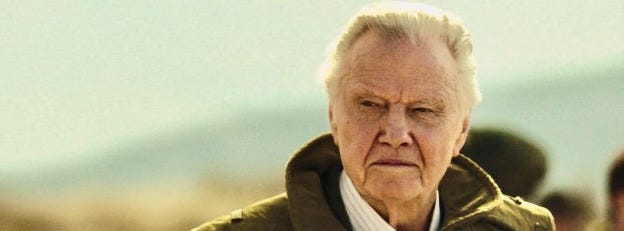
In Monument, Jon Voight steps into the role playing a celebrated architect wrestling with legacy in a world where politics and humanity collide. Rather than delivering a loud performance, he anchors the film with quiet authority — the kind that comes from experience. He gives the story emotional weight, embodying a generation trying to reconcile patriotism with conscience while younger voices push toward something more universal.
Voight has always possessed the rare quality of making intensity feel effortless. He belongs to that shrinking class of actors who do not merely play characters, but seem to carry entire eras of American filmmaking inside them. His performances are lived-in. Whether portraying bruised idealists, power brokers, or deeply conflicted patriarchs, Voight brings a raw emotional voltage that makes even silence feel dramatic.
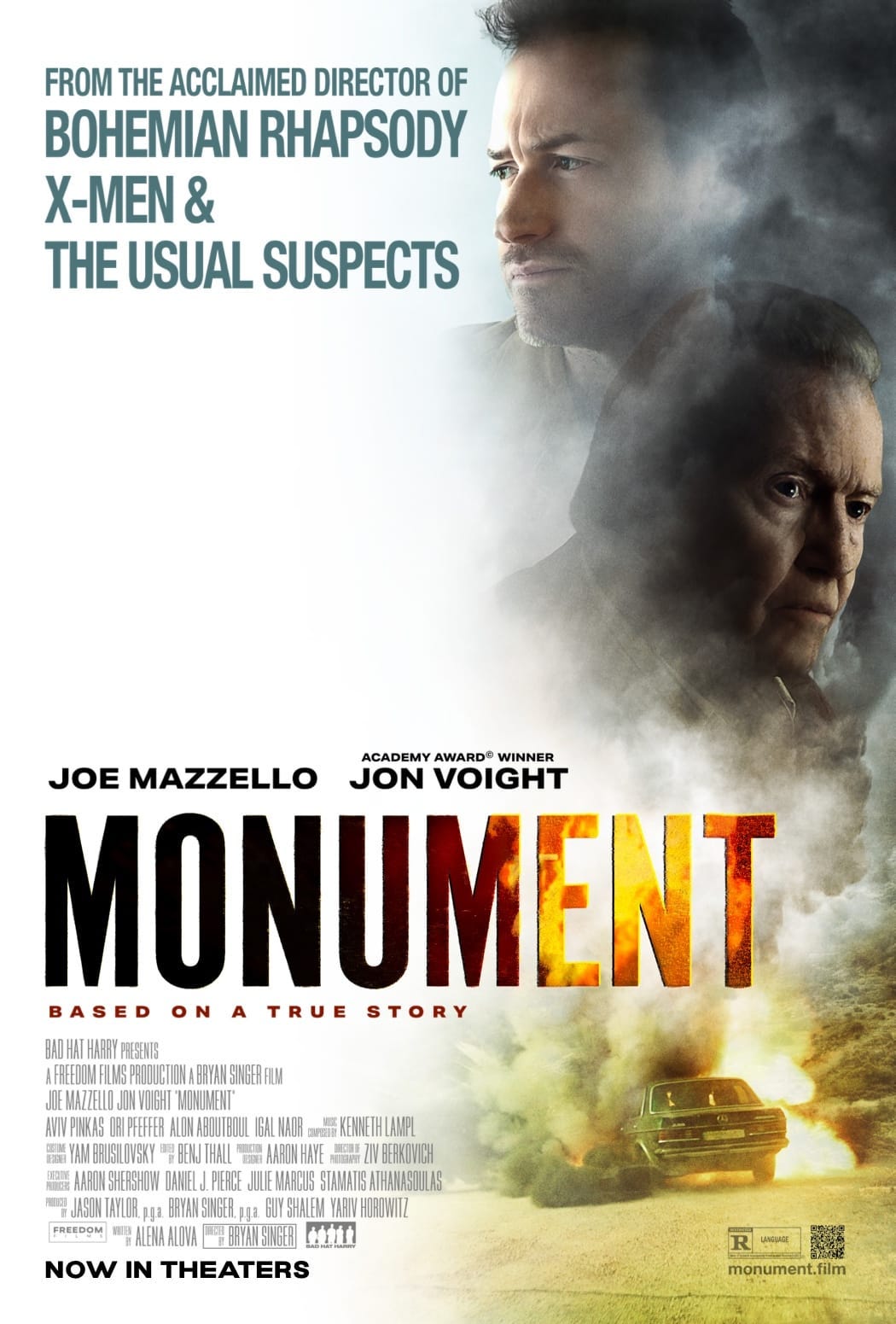
As for Monument itself, the film unfolds like an elegant political thriller wrapped inside an intimate family drama. Set against the turbulence of the Middle East at the turn of the millennium, it explores the idea of building a memorial in a region still consumed by conflict — and asks whether art can heal wounds politics cannot. The story moves with intellectual tension rather than spectacle, favoring charged conversations, moral ambiguity and emotional undercurrents over conventional war-movie theatrics.
The atmosphere is sophisticated, moody and unmistakably cinematic: Part geopolitical drama, part philosophical chamber piece. Monument feels designed for audiences who miss the era when films trusted viewers to lean into complexity. It is less concerned with providing answers than with exploring the fragile architecture of identity, grief, and reconciliation.
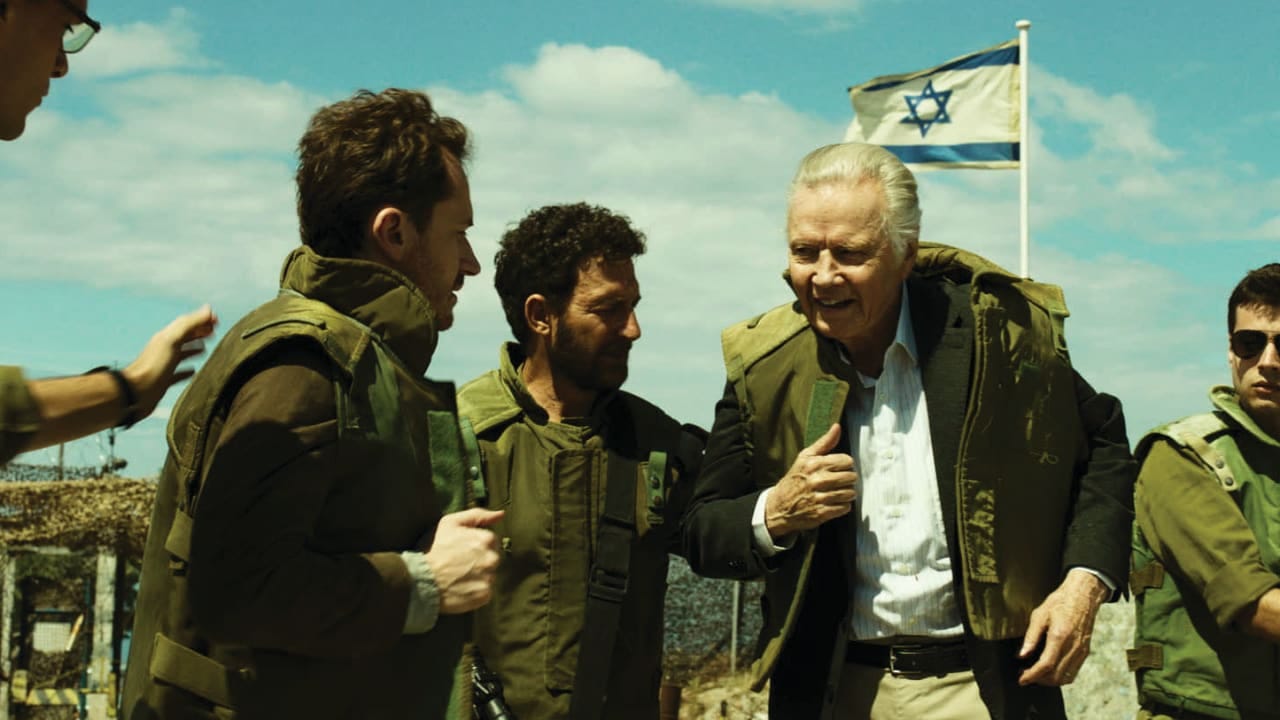
Hollywood on the Potomac sat down with Voight to talk about his latest film. What emerged was less a standard movie interview and more a deeply personal reflection on history, conflict, and the emotional weight behind the film’s story.
Voight revealed that the project came together quickly while he was already overseas filming in Bulgaria. Director Bryan Singer reached out from Greece and asked him to read the script. Voight, who said he has long admired Singer’s work, agreed almost immediately.
“I looked at it and I thought, well, maybe I can help with this thing,” Voight said. “So I said, okay, I’ll do it. And I started shooting about three days after I finished the other film that I was on.”
When asked whether Singer cast him because of his political views or his acting abilities, Voight answered with trademark dry humor before turning serious.
“My shoe size,” he joked, before adding, “I’m sure he thought I was right for the role… he was looking for a little help to make the film and give it a little substance.”
He described the film as being centered around a family of architects tied to the founding years of Israel and explores the creation of a monument honoring those protecting the Israel-Lebanon border during a period of escalating violence. Voight explained that while the film may not fully spell out every historical nuance, the backdrop is rooted in the rise of Hezbollah and the growing instability in southern Lebanon.
“There was a growing military force in Lebanon, which was Hezbollah,” Voight explained. “They didn’t at that time see it as the danger that it turned out to be.” He continued by describing how local Christian and Muslim forces working to protect the border became increasingly vulnerable, eventually leading Israel to intervene militarily.
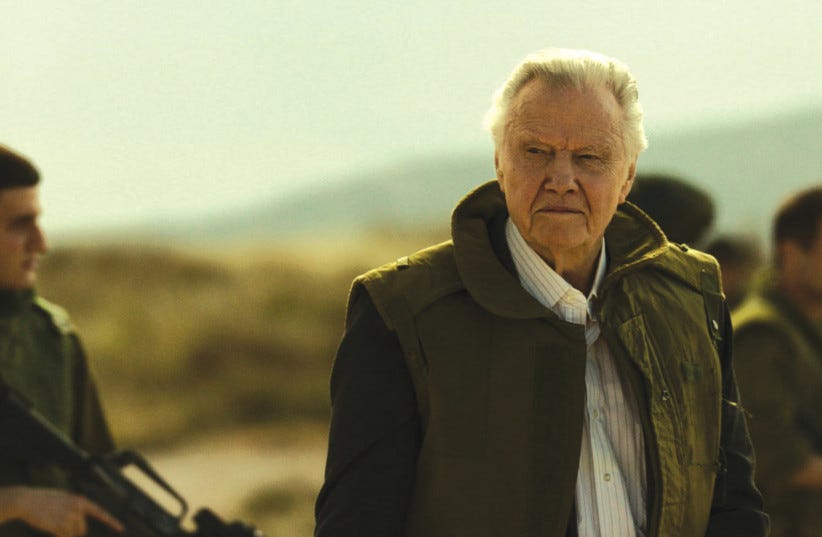
Jon Voight
According to Voight, the monument at the heart of the story was meant as a tribute to those risking their lives to maintain peace in the region — only to become a target itself.
“All of that stuff in the film is true,” he said of the shocking destruction depicted onscreen.
As the conversation turned broader, Voight reflected passionately on Israel’s history, tracing the conflict back to the nation’s founding in 1947 and describing what he sees as decades of existential struggle.
“On the day after they were given statehood, five nations attacked them, trying to wipe them into the sea,” Voight said. “They prevailed almost miraculously.”
He spoke at length about repeated wars, shifting borders, and what he believes has been a longstanding lack of global support for Israel.
“There’s been terrible attacks on the people of Israel from the beginning right down to the present day,” he said. “And the world has not been on Israel’s side.”
Despite the heavy political themes, Voight was equally enthusiastic discussing the filmmaking itself. He praised the performances, cinematography, music, and editing, repeatedly emphasizing how visually accomplished the film is.
“The filmmaking is very beautiful,” he said. “The use of music and editing. It’s a very, very well-made film.”
And in classic Jon Voight fashion, when asked about having to speak in an accent, he turned charming. When the conversation shifted to language and dialect work, Voight complimented the interviewer’s ability to speak four languages, jokingly insisting that anyone capable of that was “a very, very smart person.” He went on to reflect on how much he admires multilingual people, adding a surprisingly warm and personal note to an otherwise intense conversation about war, history, and filmmaking.
Monument is now in theaters and premiered at Angelika Pop-up at Union Market on April 17th for a month.